For once I'm not actually posting one of my own articles! Read about this today and thought it was really interesting - a modified form of the herpes virus has been used to treat skin cancers. As I did my Extended Project Qualification (EPQ) on the use of cannabinoids (extracts from the cannabis plant) to treat cancer, I find novel methods of tackling tumours really fascinating. Worth a read if you have a minute, I've used the NHS' coverage of it as I feel it's laid out more clearly than some of the others!
http://www.nhs.uk/news/2015/05May/Pages/Modified-herpes-virus-could-combat-skin-cancer.aspx
Showing posts with label biology. Show all posts
Showing posts with label biology. Show all posts
Wednesday, 27 May 2015

Sunday, 24 May 2015
Introduction to DNA, Genes, Chromosomes and Nucleotides
Genetics can seem a little daunting at first but once the basics are understood it is fairly easy to build on that knowledge and understand genetics in much more depth. To begin with, we need to establish the definitions of some key terms.
 Probably the best place to start is with nucleotides, which are the building blocks of DNA.
They consist of a sugar (called deoxyribose), a base (a nitrogenous ring-like structure), and a phosphate group (pictured left).
The sugar and the phosphate groups are pretty much always the same in DNA nucleotides, but it is the bases that are really important. There are four different types of bases, known as adenine, thymine, cytosine and guanine.
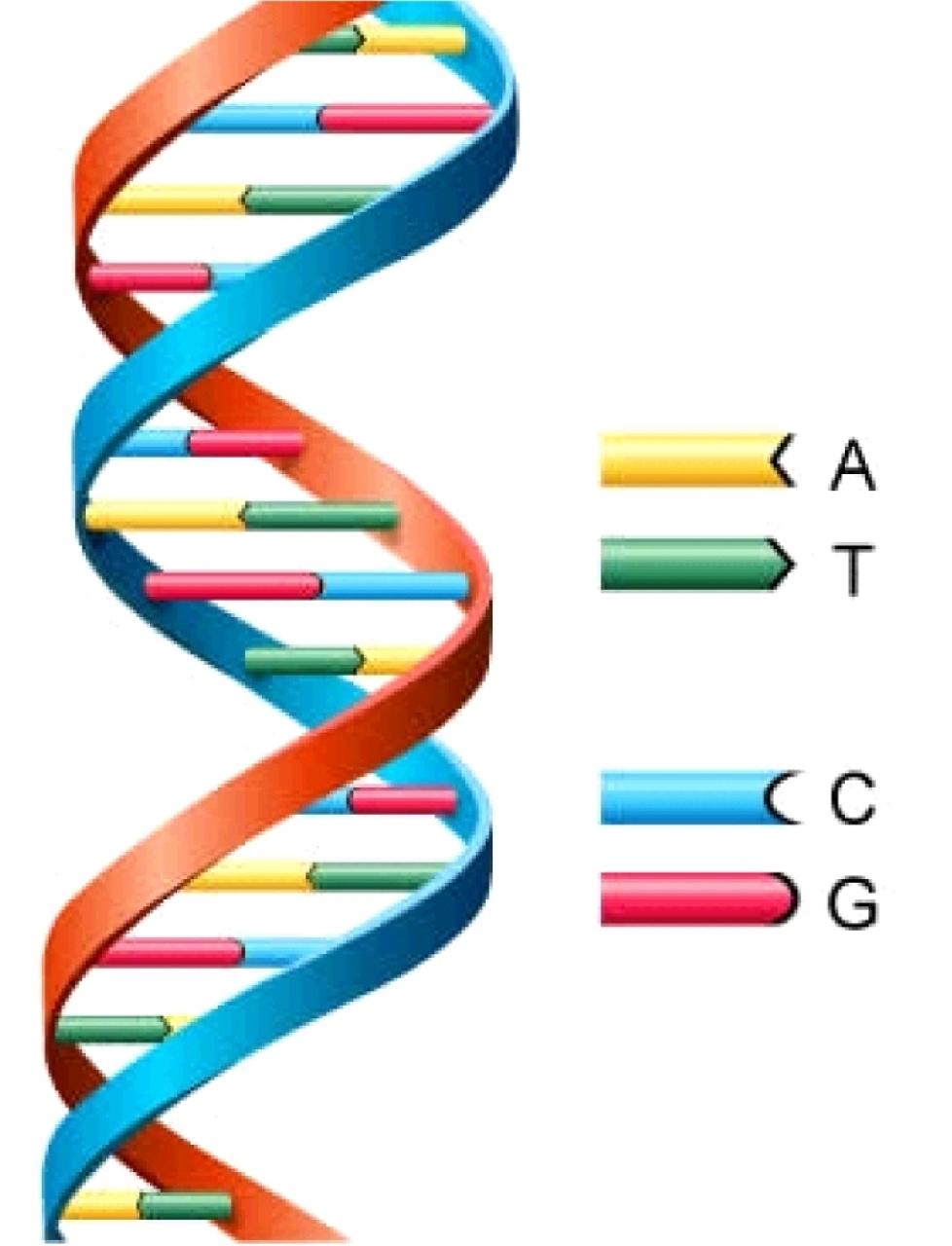
The bases mentioned earlier (adenine, thymine, cytosine and guanine) pair in particular ways in the DNA molecule:
Adenine ALWAYS pairs with thymine
Cytosine ALWAYS pairs with guanine.
This is also shown here, represented by the letters A, T, C and G.
A gene is a length of DNA that codes for a particular protein. Proteins are made up of amino acids that form long chains called polypeptides - large polypeptides are referred to as proteins. One amino acid is formed from 3 nucleotides which are referred to as a 'triplet code'. A series of triplet codes forms a series of amino acids. Humans have about 25,000 genes, made up of about 3 billion nucleotide base pairs. The difference between DNA and genes is that DNA is all of the genetic information in the cell, and the gene is just one particular segment of this that has a specific code for a specific protein.
 DNA is not just free in the nucleus but is in fact organised into chromosomes. The genes are on these chromosomes - different genes are present on different chromosomes. Humans have 23 pairs of chromosomes (one copy of each chromosome from each parent). Chromosomes are made up of 'chromatin' which is just DNA wrapped around histone proteins. 'Chromosome' is the collective term for two sister chromatids (as mentioned before, one comes from each parent) joined in the middle by the 'centromere' which will be explored further when I discuss mitosis and meiosis.
SO, just to clarify:
- The nucleus stores all of the cell's genetic material.
- In the nucleus, there are chromosomes which are comprised of DNA tightly coiled around special proteins.
- DNA is made from chains of nucleotides.
- Sections of the DNA that code for particular proteins are referred to as genes.
Tuesday, 19 May 2015
Article 3: Seasonal Variation in Genetic Immunity
Wrote my third article for Bang this week and currently in the process of writing my first article for the Oxford Student which is exciting! I also went to an excellent talk by Immediate Media tonight, really hoping I can do work experience with them at some point. Anyway, link to the article is below (yet another one on genetics sorry) and will be hopefully posting more often in the next few weeks!
Thursday, 30 April 2015
Article 2: Genetic Susceptibility to the Placebo Effect
Second article is now up, the link is:
http://www.bangscience.org/2015/04/the-placebome-genetic-susceptibility-to-the-placebo-effect/
Let me know what you think! :)
http://www.bangscience.org/2015/04/the-placebome-genetic-susceptibility-to-the-placebo-effect/
Let me know what you think! :)
Subscribe to:
Comments (Atom)